Ai Weiwei
After Les Nuages
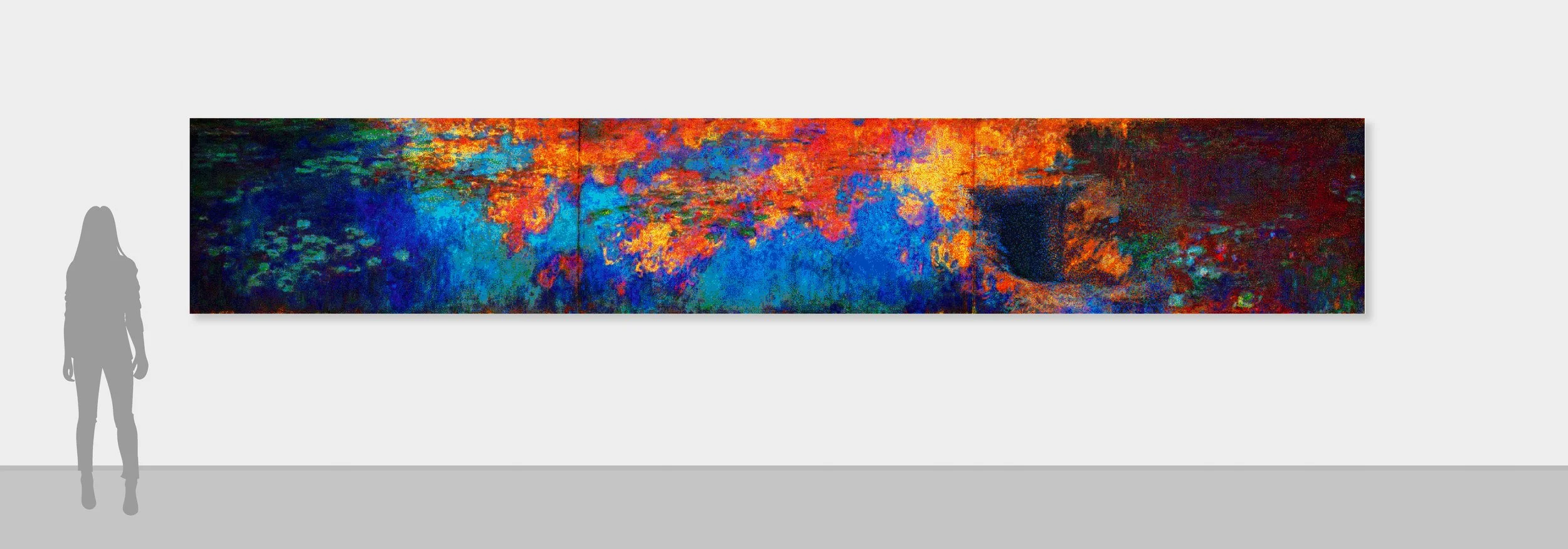
Ai Weiwei, After Les Nuages, 2024
40 Color Relief Print on Aluminum Dibond , 107.2 × 610.7 cm (42.2 × 240.4 in)
Signed, dated and numbered on different panels, Edition of 14, Price $99,000
By recreating these iconic paintings with Lego bricks, - a universal symbol of creativity and play - Ai Weiwei connects the legacy of Monet’s groundbreaking work with his own activism and critique of authority. The combination of these influences elevates the piece from a mere tribute to Monet’s Water Lilies to a multilayered narrative of immense beauty, grief, and reflection on the importance of artistic freedom in society, that is at once playful and imposing.
Limited to an edition of 14 prints, After Les Nuages stands as a masterpiece poised to become a cornerstone for contemporary collectors. Produced through an intricate printing process with 40 carefully layered colours on aluminium Dibond, the work reflects the unique texture and structural essence of Lego without replicating its physical form. To capture the sheer scale and force of Water Lilies #1, the monumental After Les Nuages was innovatively divided into three separate panels, with each panel having the option to be hung separately. This union of visionary artistry and cutting-edge technology positions After Les Nuages as one of Ai Weiwei’s most iconic and technologically sophisticated artworks to only gain value over time.
Ai Weiwei (b. 1957, Beijing) is one of the most influential artists and provocateurs of our time. He is celebrated for blending Chinese history and tradition with artistic expression and political activism, all within a wholly contemporary practice. Beyond traditional mediums, his artistic work extends to architecture, documentary filmmaking, and large-scale public installations, each serving as a form of human rights activism, cultural commentary, and critiques of the global imbalance of power. Born into exile due to his father’s political persecution, Ai Weiwei's early life was marked by hardship, shaping his lifelong commitment to questioning authority. This commitment has often made him a political target in the past. He studied at the Beijing Film Academy before moving to New York in the 1980s, where he was influenced by conceptual art and artists such as Marcel Duchamp and Andy Warhol. Returning to China in the 1990s, Ai Weiwei emerged as a key figure in contemporary Chinese art while also co-founding independent art spaces and experimenting with radical forms of artistic expression. After years of surveillance and restrictions, he was eventually allowed to leave China in 2015 and has since lived in Germany, the United Kingdom, and Portugal.
Ai Weiwei’s works are held in major museums worldwide and have been exhibited in leading institutions such as Tate Modern, the Royal Academy of Arts, and the Venice Biennale. His relentless pursuit of truth and justice, coupled with his innovative artistic vision, continues to inspire global audiences and redefine the role of art in society. As Ai Weiwei himself asserts, “Everything is art. Everything is politics.”
“ The human struggle and the freedom of speech. Those values are not given by anybody. It always comes through fighting and struggle. Because somebody has to defend it. And also, if just one person defends it, it benefits everybody. „
—Ai Weiwei
After Les Nuages
Click on images to enlarge
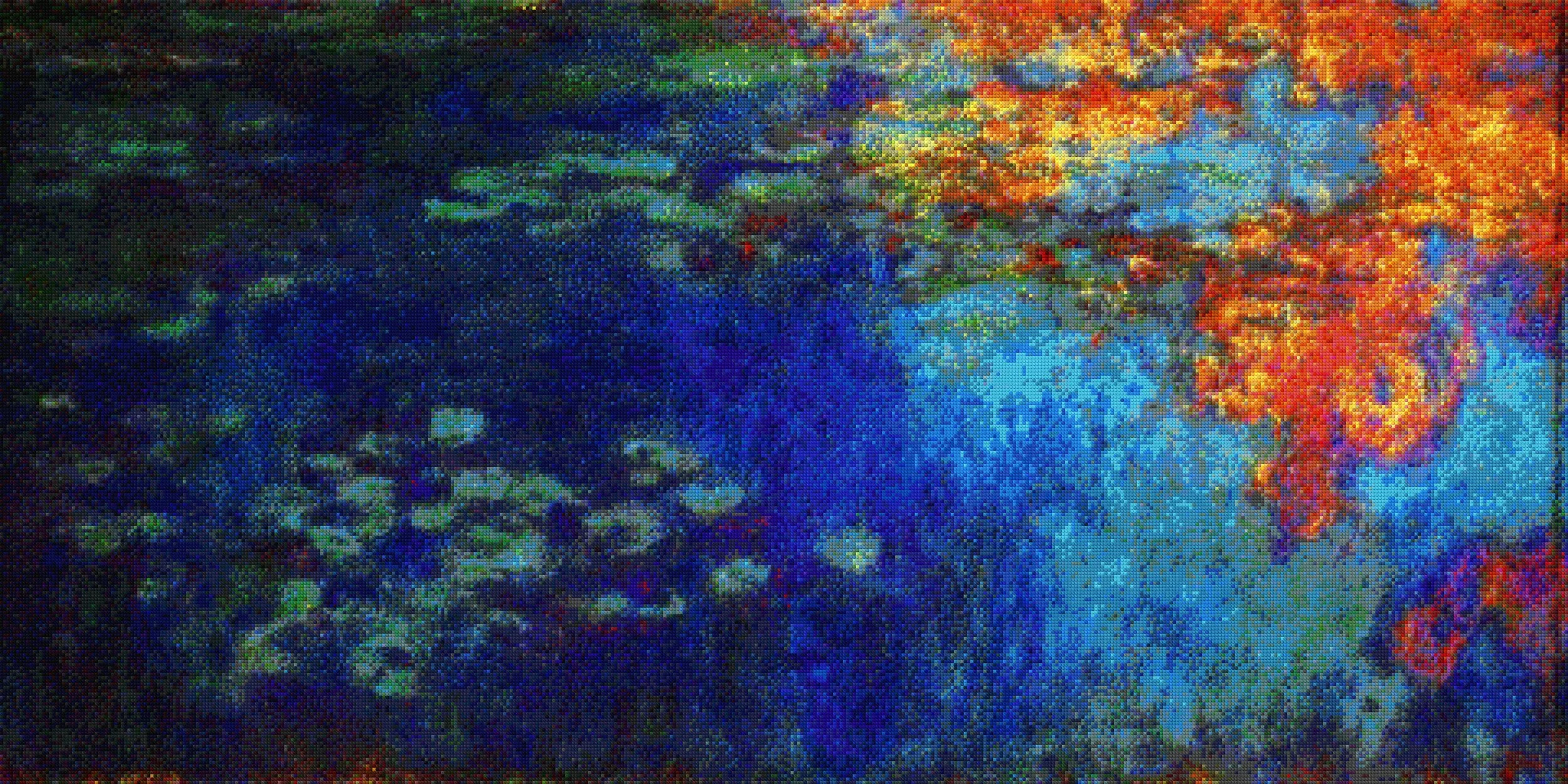
"Les Nuages" left panel, (42.2 × 80 in)
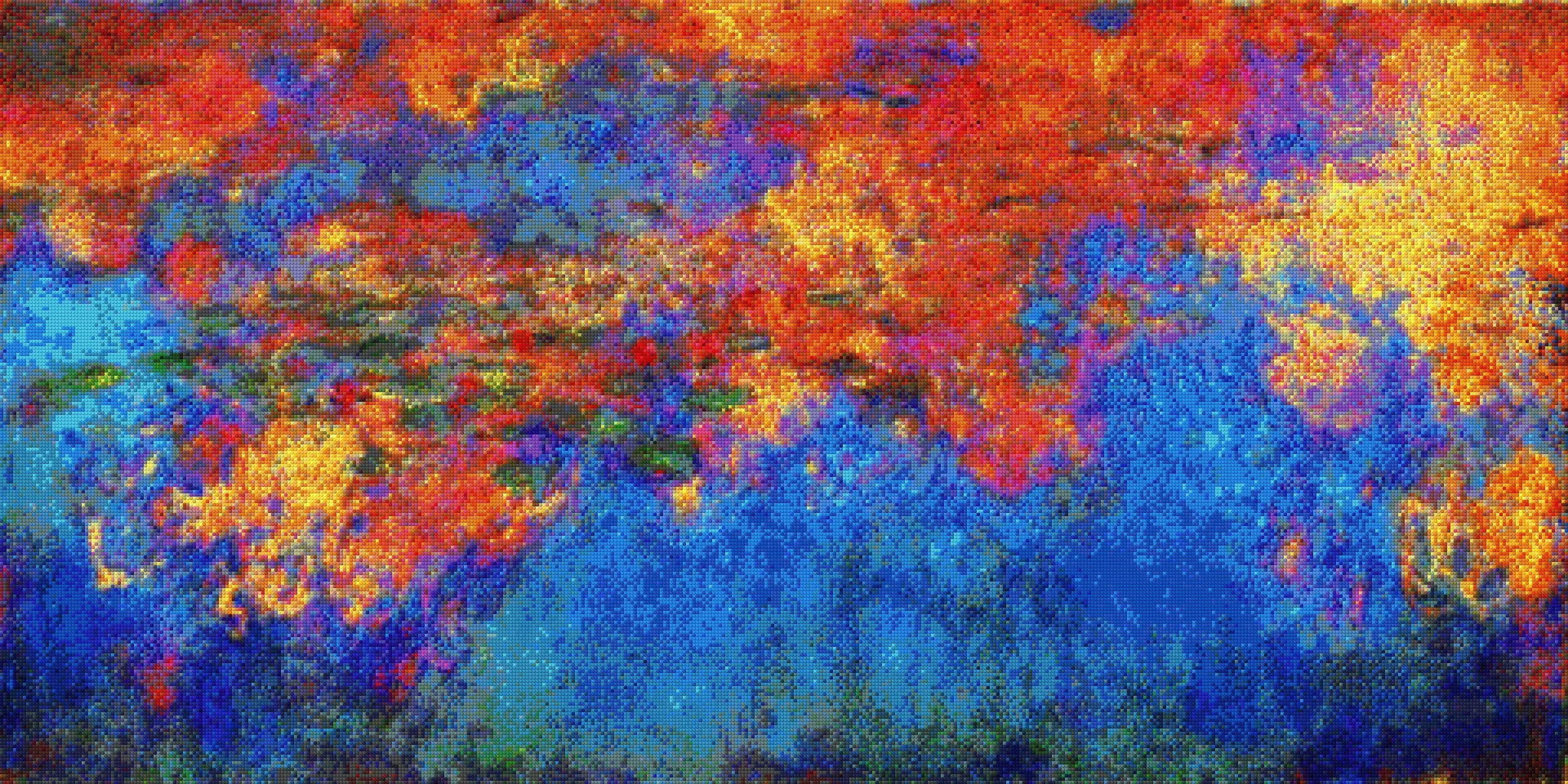
"Les Nuages" center panel, (42.2 × 80 in)
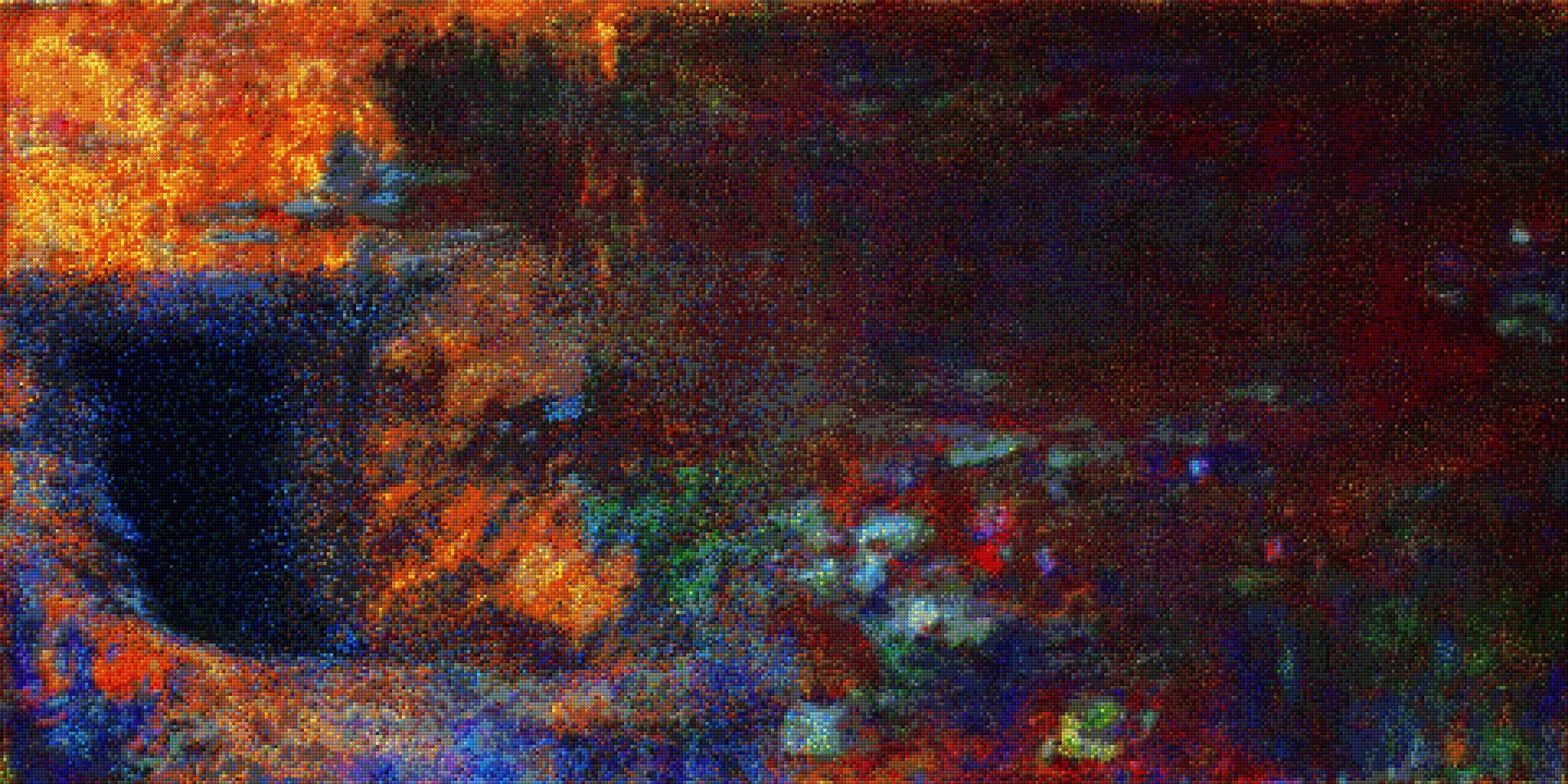
"Les Nuages" right panel, (42.2 × 80 in)
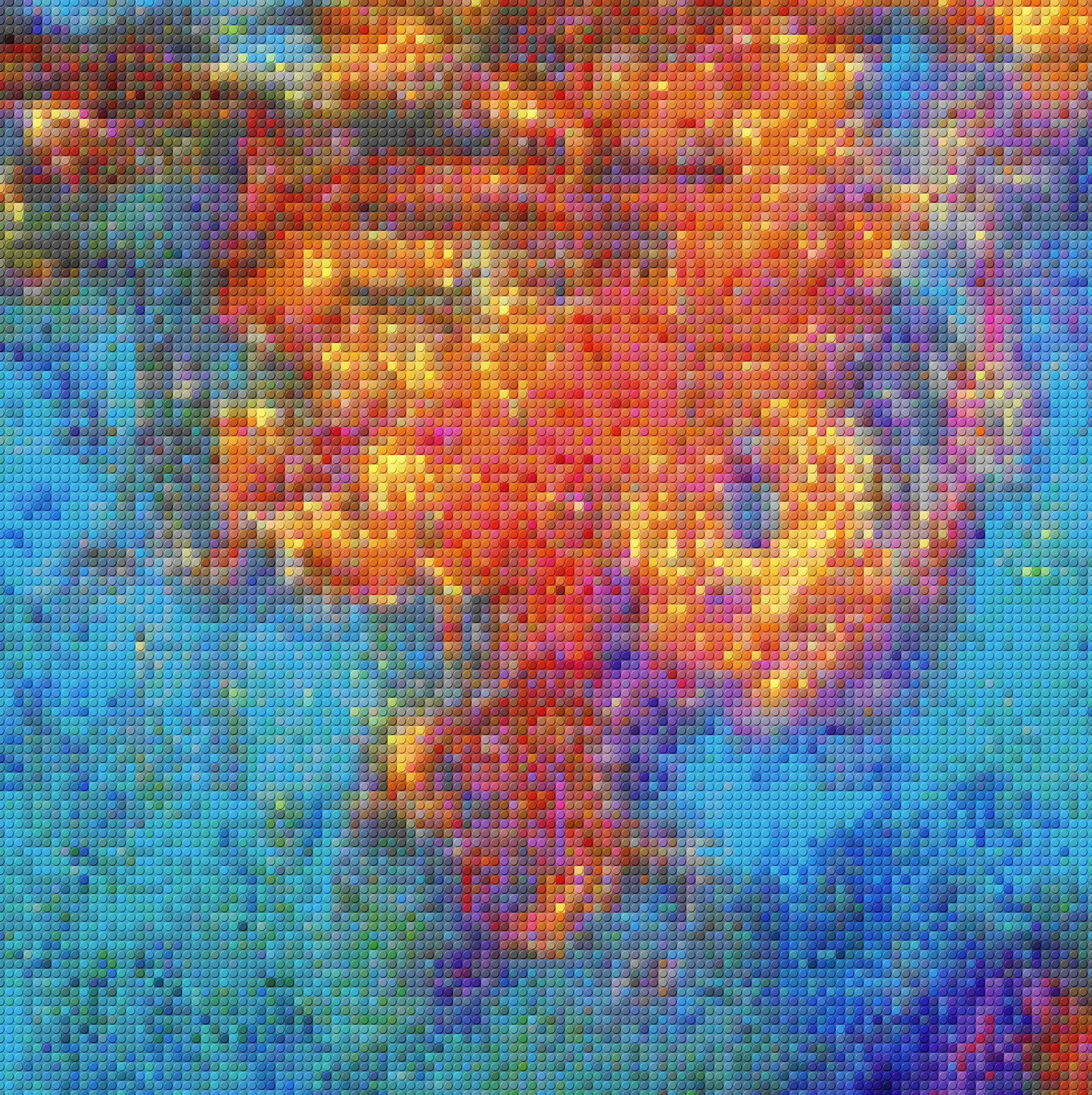
Detail center panel
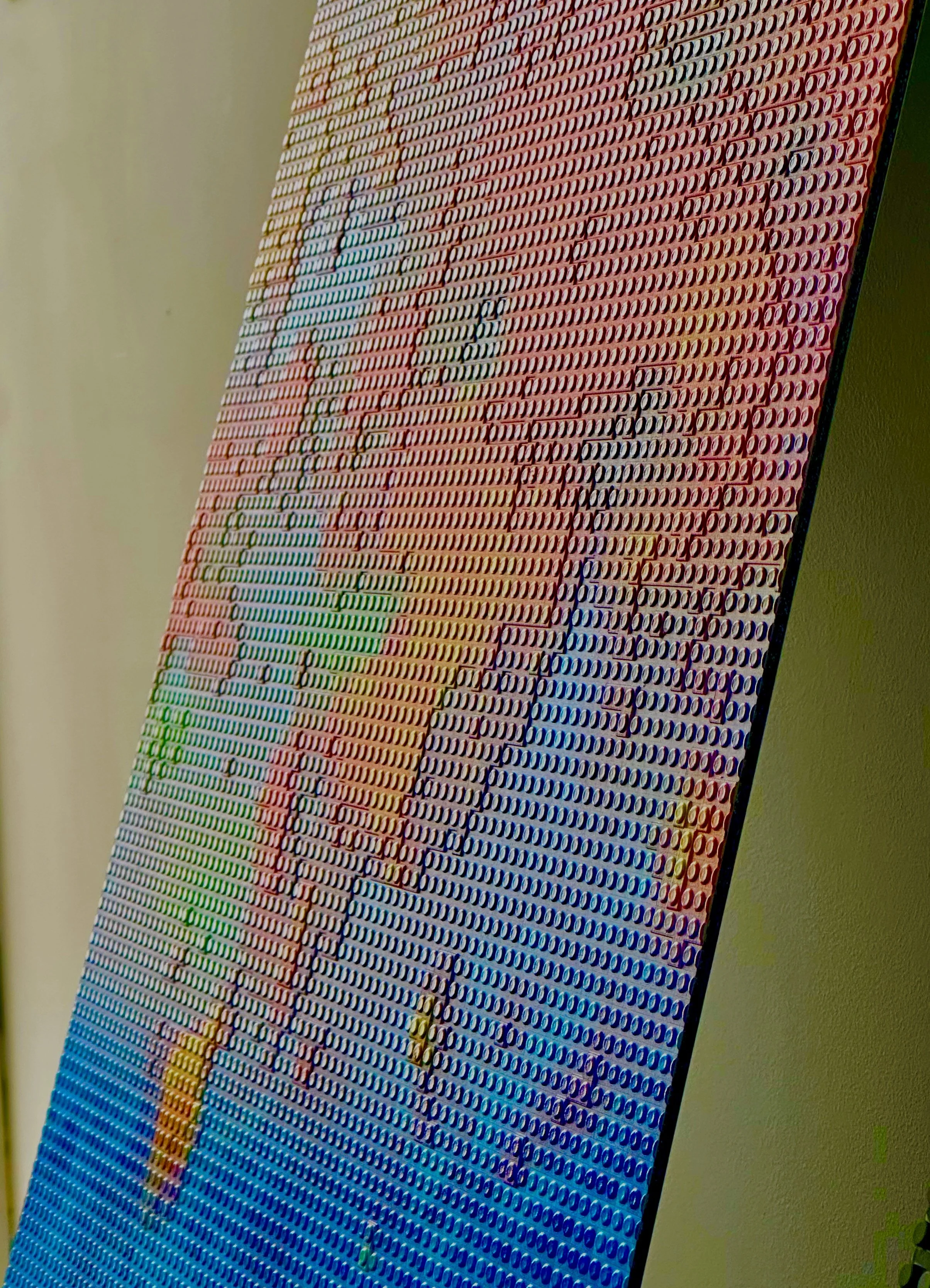
Proof detail
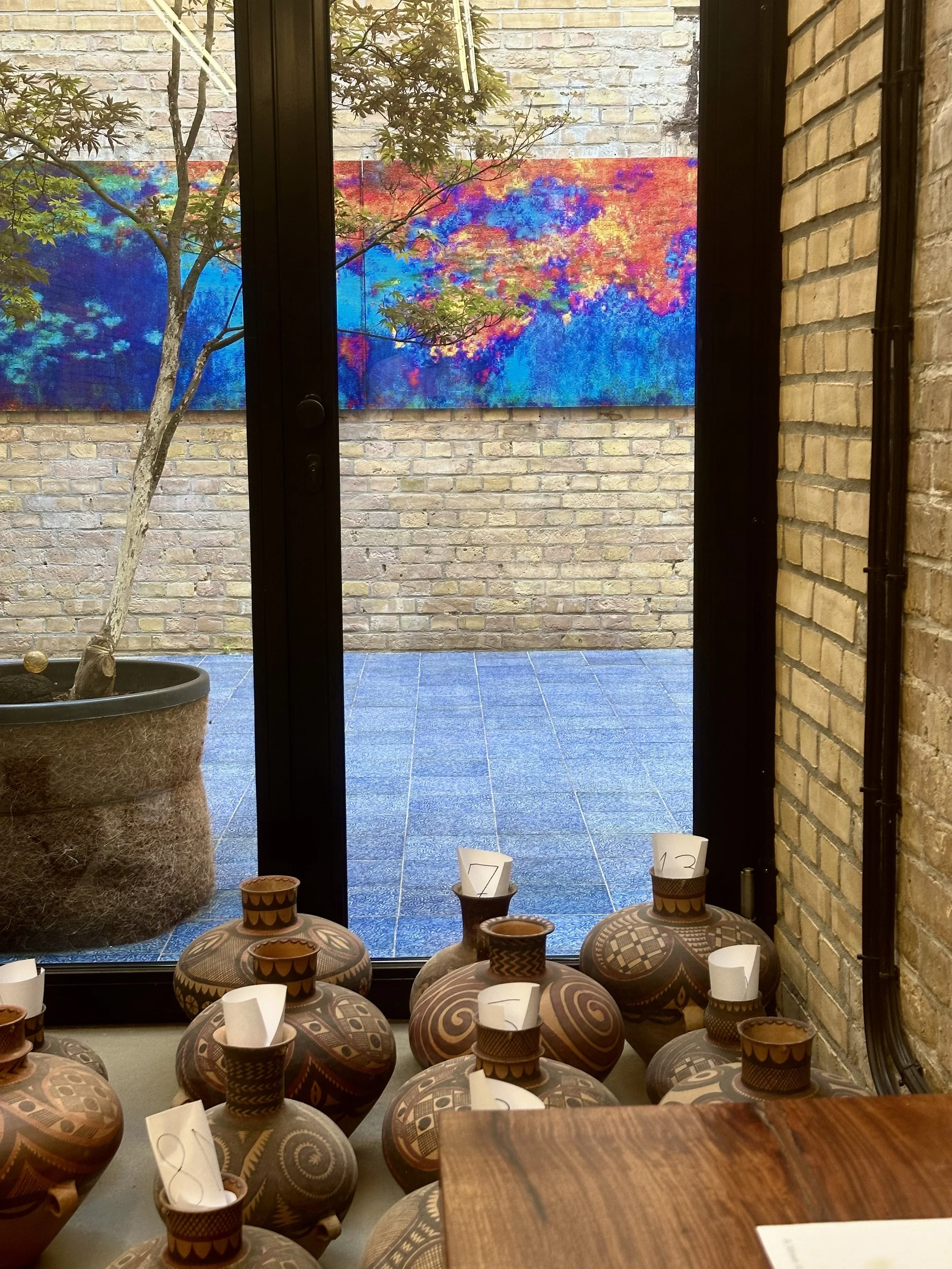
Studio view
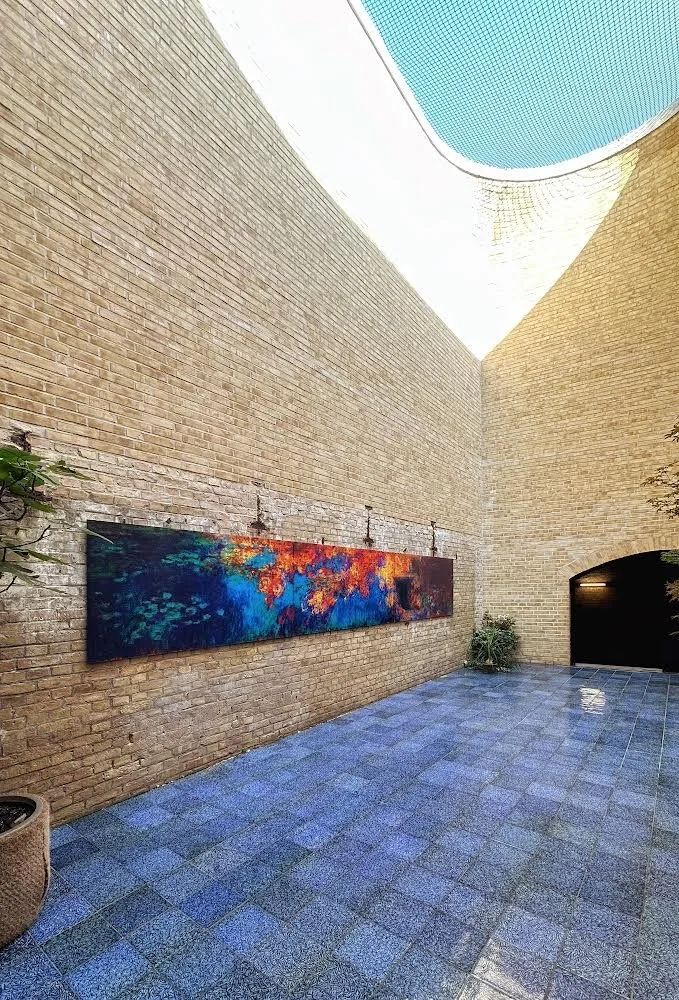
Studio view
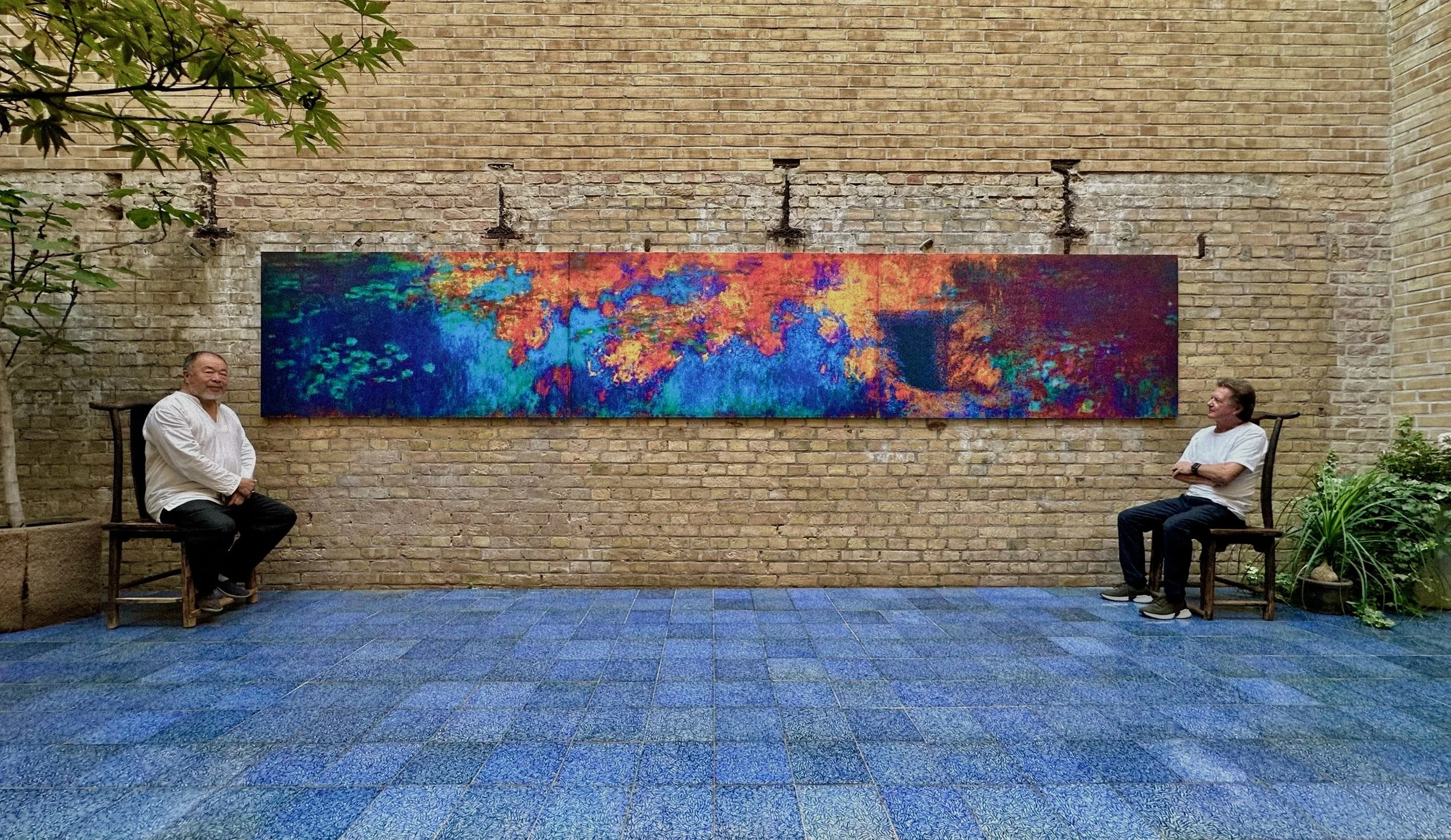
Ai Weiwei and David Adamson Limited edition dimensional UV print on aluminium by Adamson Gallery/Editions and Ai Weiwei studio.
Obsidian I and Obsidian II
Limited edition archival pigment print by Adamson Gallery/Editions
Price 30,000 US each , 50,000 US for the pair

Obsidian I, 2021, archival pigment print, paper size: 223 cms x 152.5 cms, Edition of 30, signature stamp on verso, signed and numbered on recto

Obsidian II, 2021, archival pigment print, paper size: 223 cms x 152.5 cms, Edition of 30, signature stamp on verso, signed and numbered on recto

Scale model
Obsidian I and Obsidian II
The imagery in the prints Obsidian I and Obsidian II derives from one of two monumental chandeliers on which Ai Weiwei started working in 2017 in collaboration with Berengo Studio on the island of Murano in the Venetian lagoon. Known for his practice of working with skilled craftsmen in all disciplines, the long history of glass blowing in the Venetian and specifically Murano inspired him to create his own work in glass, the two monumental chandelier one 9 meters high and 6 meters wide the other 2.5 meters high that would be be a challenge to received ideas on the function of chandeliers, namely, to cast light, as well as being a challenge to the glass blowers at the Studio. In 1724 Giuseppe Briati, one of the most famous producers of chandeliers, created what would become known as the Rezzonico Chandelier, decorated with garlands, flowers and leaves. Such chandeliers are still being produced today.
As described by the Ai Weiwei Studio: “Contrary to the Latin stem of the word “chandelier,” candere, which means “be white, glisten, Ai Weiwei’s chandelier is black, a color which absorbs all the light. A glass assemblage of human skulls, skeletons, animal bones, internal organs and crabs, this artwork reimagines the classic Venetian glass chandelier and reverses the object’s function and connotations.” In the tradition of Vanitas paintings of the 17th.century and memento mori, it may be seen as a reflection on the troubled times in which we live.
Co-published by Ai Weiwei and Adamson Editions, Obsidian I and Obsidian II started when Ai Weiwei and Adamson met to discuss potential projects. Ai Weiwei showed Adamson photographs of the massive chandeliers and asked if it was possible to make a print that could do justice to the originals. Size was of the issue and the decision was to first make an edition based on the 2.5-meter-tall chandelier and produce it as close to life size as possible. This edition would become in Ai Weiwei’s words a map that would provide a unique macroscopic preview of the chandelier before it has been exhibited. The first step in the printmaking process was to have it photographed in extremely high resolution at the factory in Murano. These raw images would show two different aspects of the work at a resolution enabling the smallest detail to be revealed down to the dust particles speckling the dense black glass. The extensive process of proofing happened to coincide with Adamson’s use of a new black pigment and custom print software that enabled the production of the richest blacks ever printed by Adamson editions. This led to the choice of Obsidian as the title of the two prints as not only is obsidian the blackest natural substance on earth, this naturally occurring volcanic glass has been used for a multitude of purposes since prehistoric times, from stone age axes to contemporary surgical instruments and as mirrors that allowed Mayan shamans a view into the underworld.
Ai Weiwei’s Vases in Five Colours (2024)
These vases continues the artist’s long-standing interrogation of cultural identity, commercialisation, and artistic heritage. This series of five Murano glass vases—rendered in blue, green, mustard, black, and white—pays homage to traditional Chinese ceramics while embedding them within a globalised context. The vibrant hues reference ancient Chinese glazes, yet their sleek, translucent surfaces betray a contemporary sensibility. By employing Murano glass, a material deeply tied to Venetian craftsmanship, Ai Weiwei merges two artistic traditions, challenging notions of authenticity and ownership. The interplay between the artisanal and the mass-produced echoes his broader critique of cultural commodification and the impact of Western capitalism on Chinese heritage. These vases are more than decorative objects; they are vessels of contradiction. The Coca-Cola emblem, a ubiquitous symbol of consumer culture, disrupts the historical reverence associated with ceramic traditions, much like Ai Weiwei’s earlier works starting in 1994, where he painted the logo onto 2,000-year-old Han-dynasty urns. His works such as Dropping a Han Dynasty Urn (1995) and Han Jar Overpainted with Coca-Cola Logo (1995) are iconic examples of how he provocatively addresses China's historical confrontation with Western influences. Here, however, the medium itself shifts the conversation. The fragility of glass contrasts with the permanence of branding, suggesting both the resilience and vulnerability of cultural identity in an increasingly homogenized world.
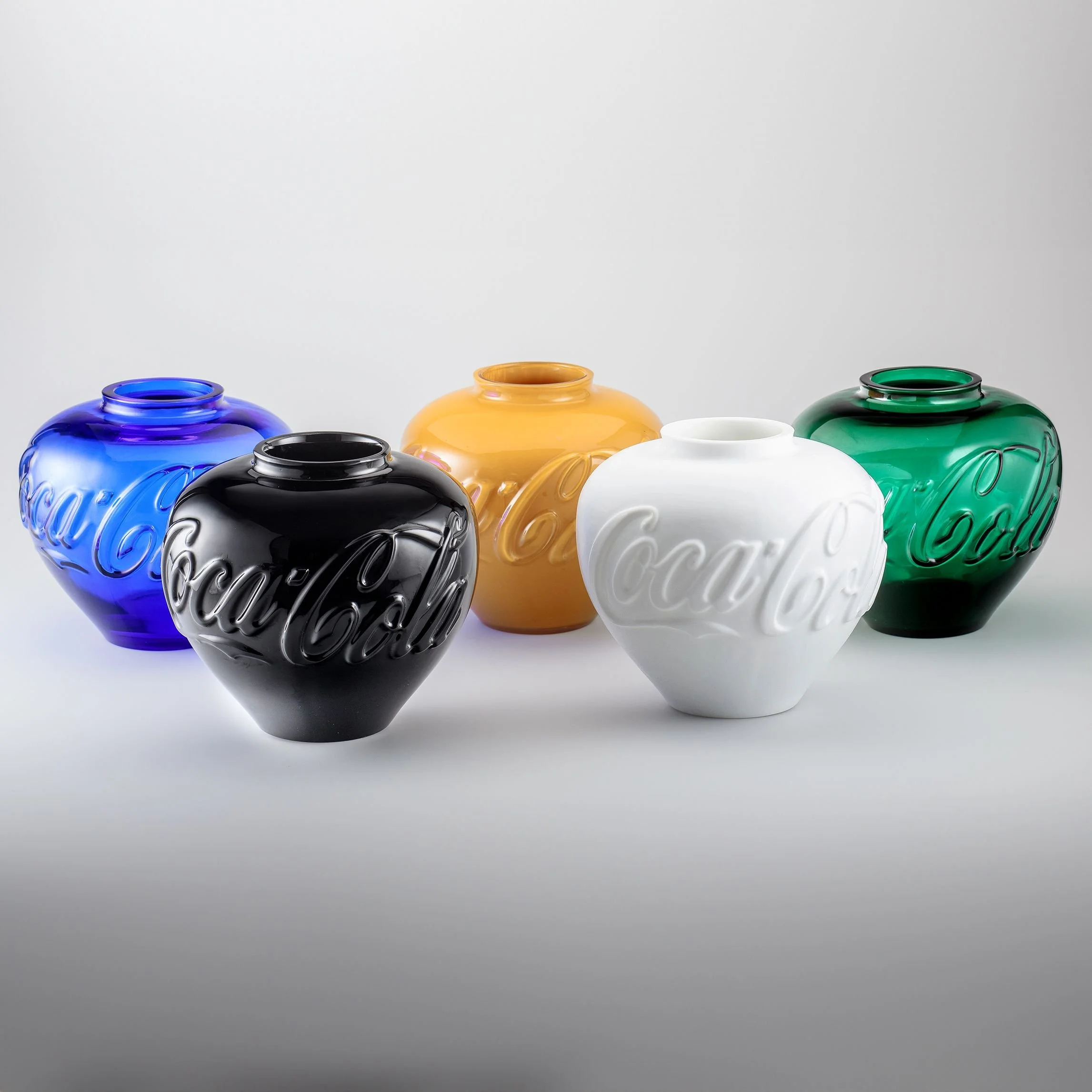
Ai Weiwei
Vases in Five Colours (Set of 5) 2024
Murano Glass, 22 × 20.5 cm, (8.7 × 8.1 in)
Signed and numbered on accompanying certificate and inscribed on the bottom
Less than 40 compiled with matching numbers, Price 25,000 US
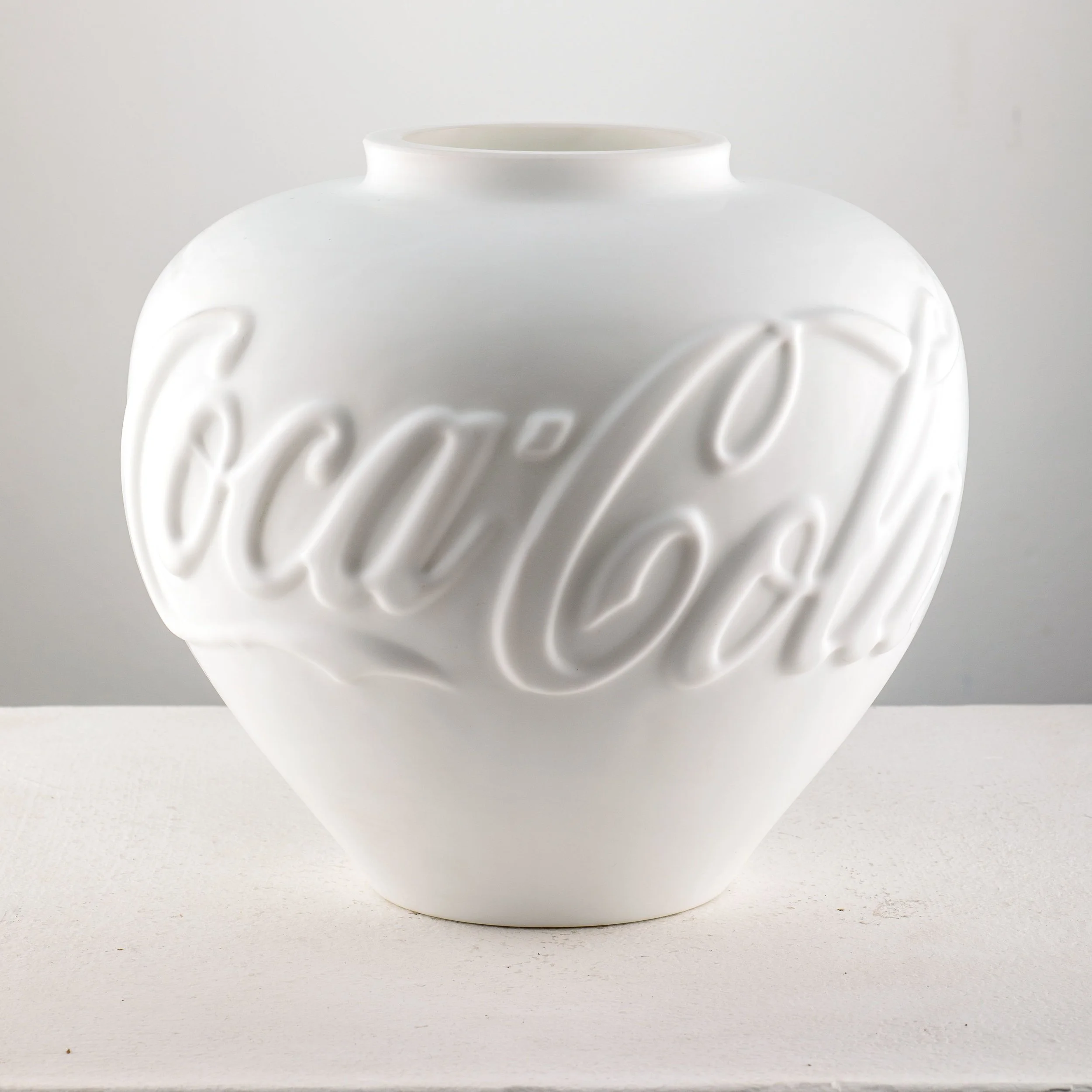
Ai Weiwei Vase (White) 2024 Murano Glass 22 × 22 × 20.5 cm (8.7 × 8.7 × 8.1 in)
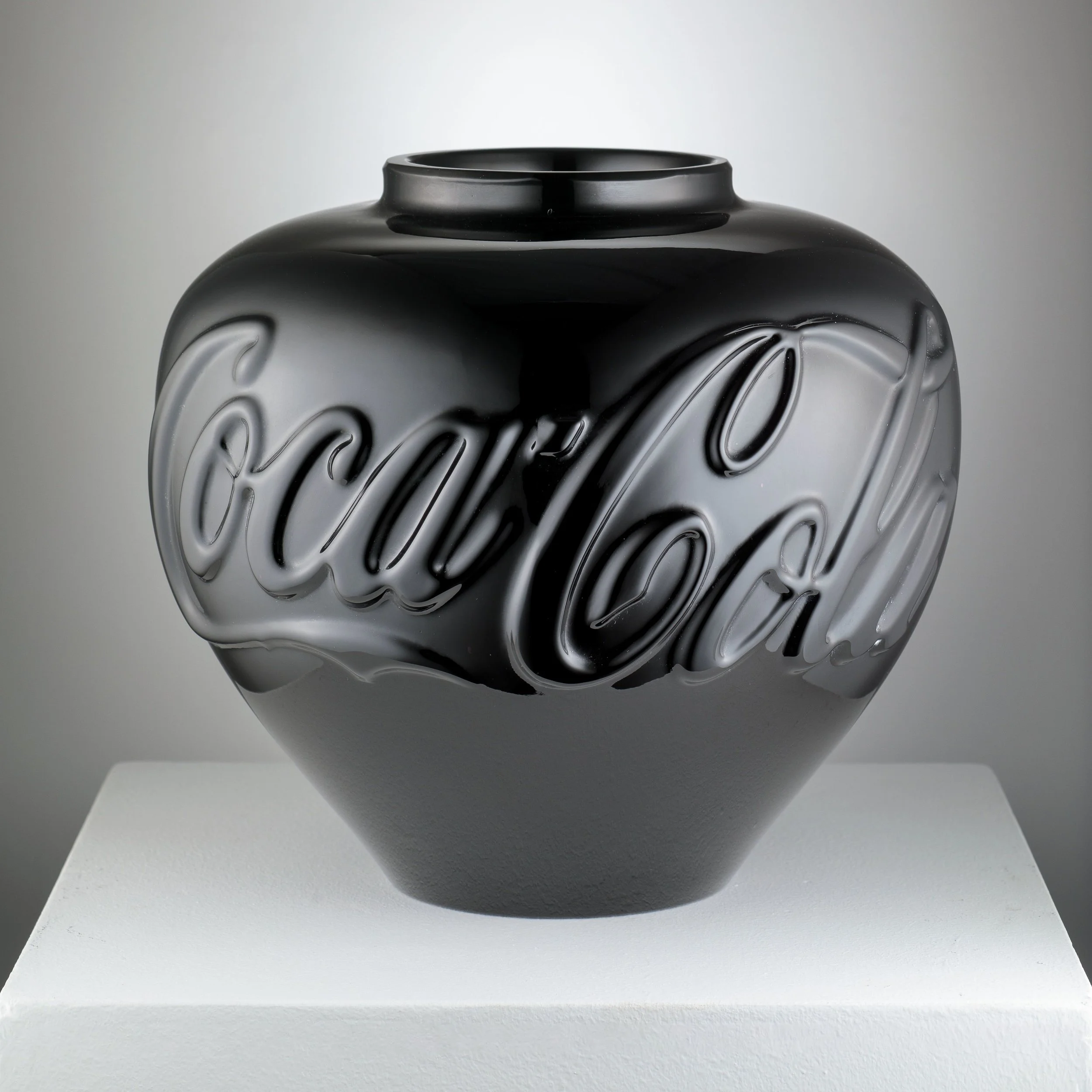
Ai Weiwei Vase (Black) 2024 Murano Glass 22 × 22 × 20.5 cm (8.7 × 8.7 × 8.1 in)
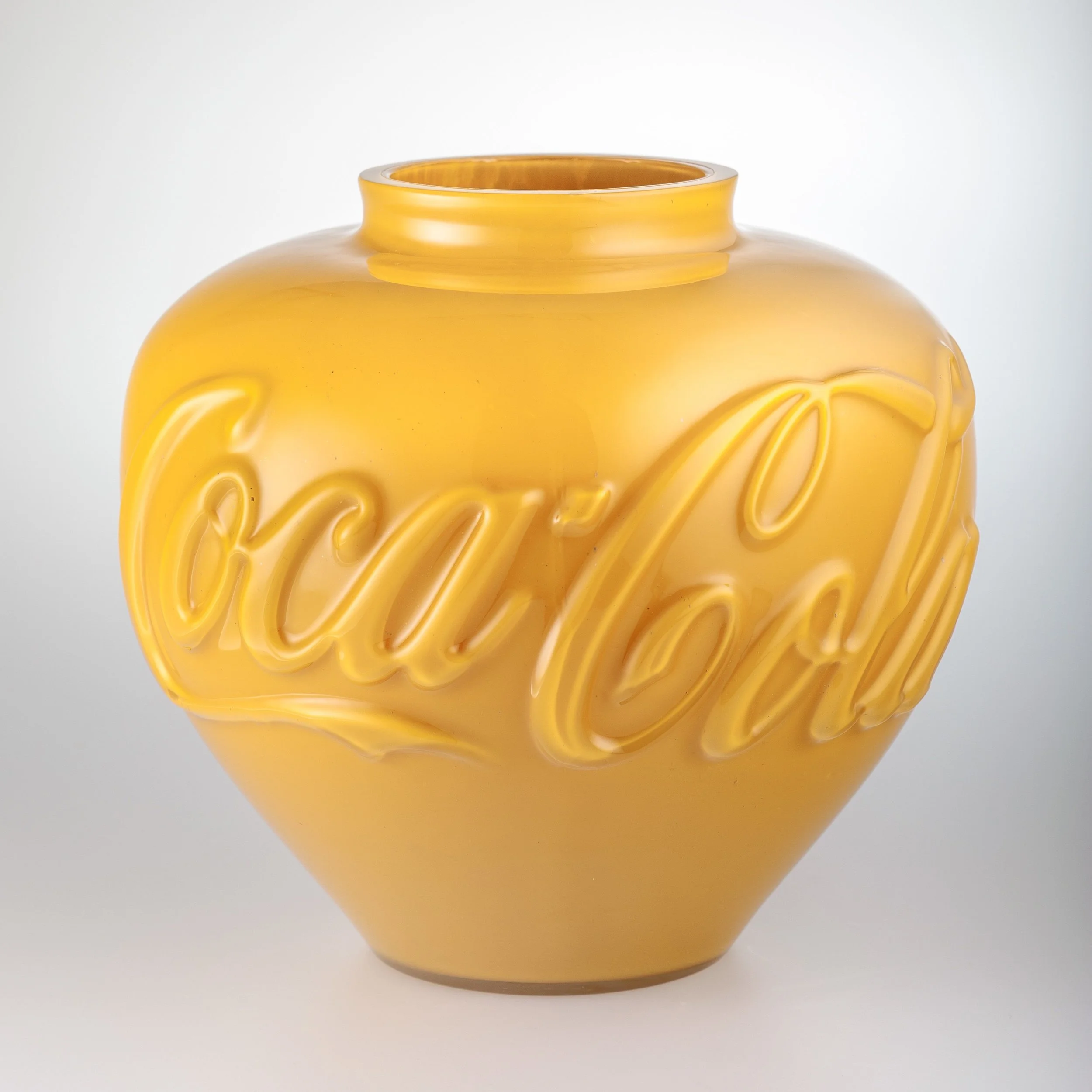
Ai Weiwei Vase (Mustard) 2024 Murano Glass 22 × 22 × 20.5 cm (8.7 × 8.7 × 8.1 in)
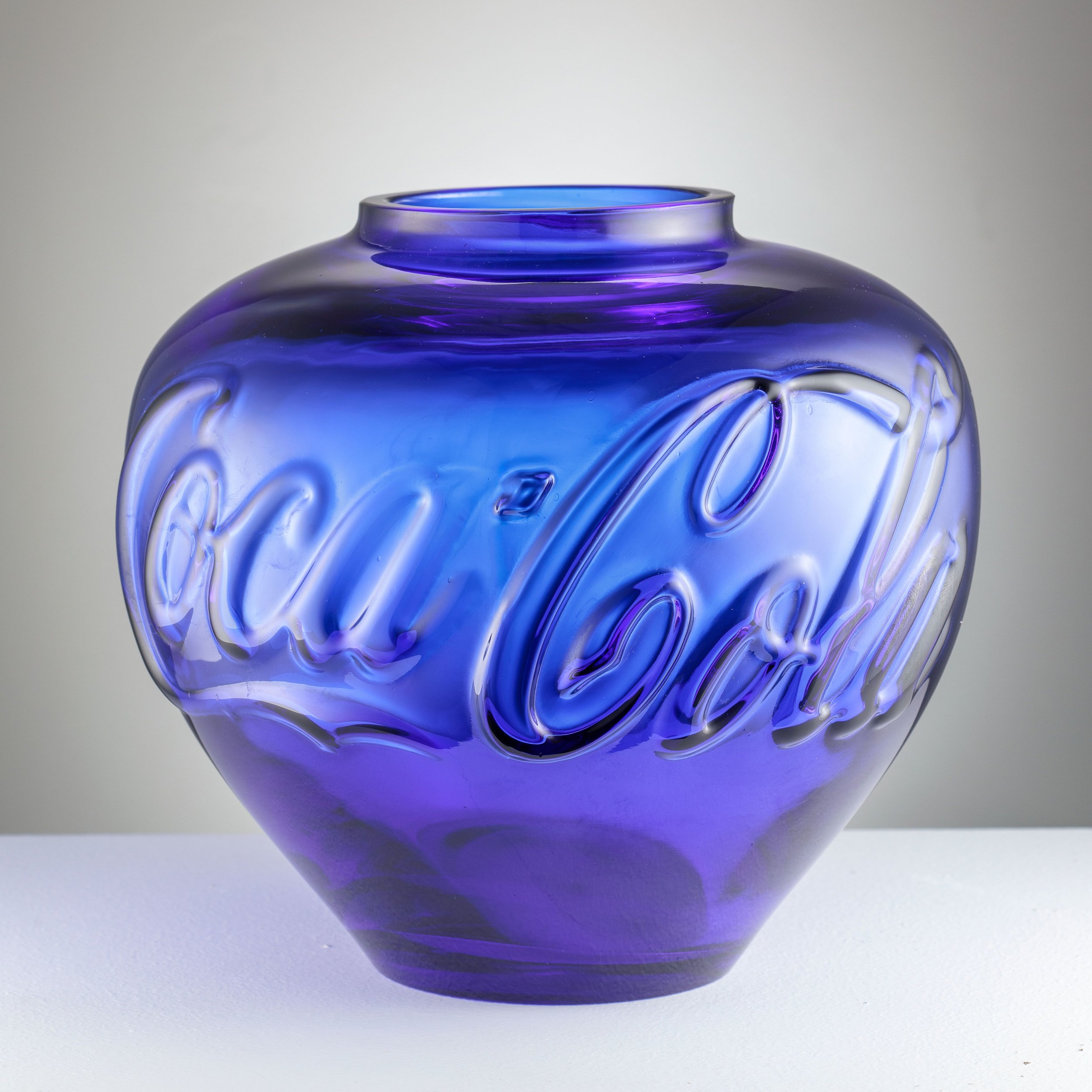
Ai Weiwei Vase (Blue) 2024 Murano Glass 22 × 22 × 20.5 cm (8.7 × 8.7 × 8.1 in)
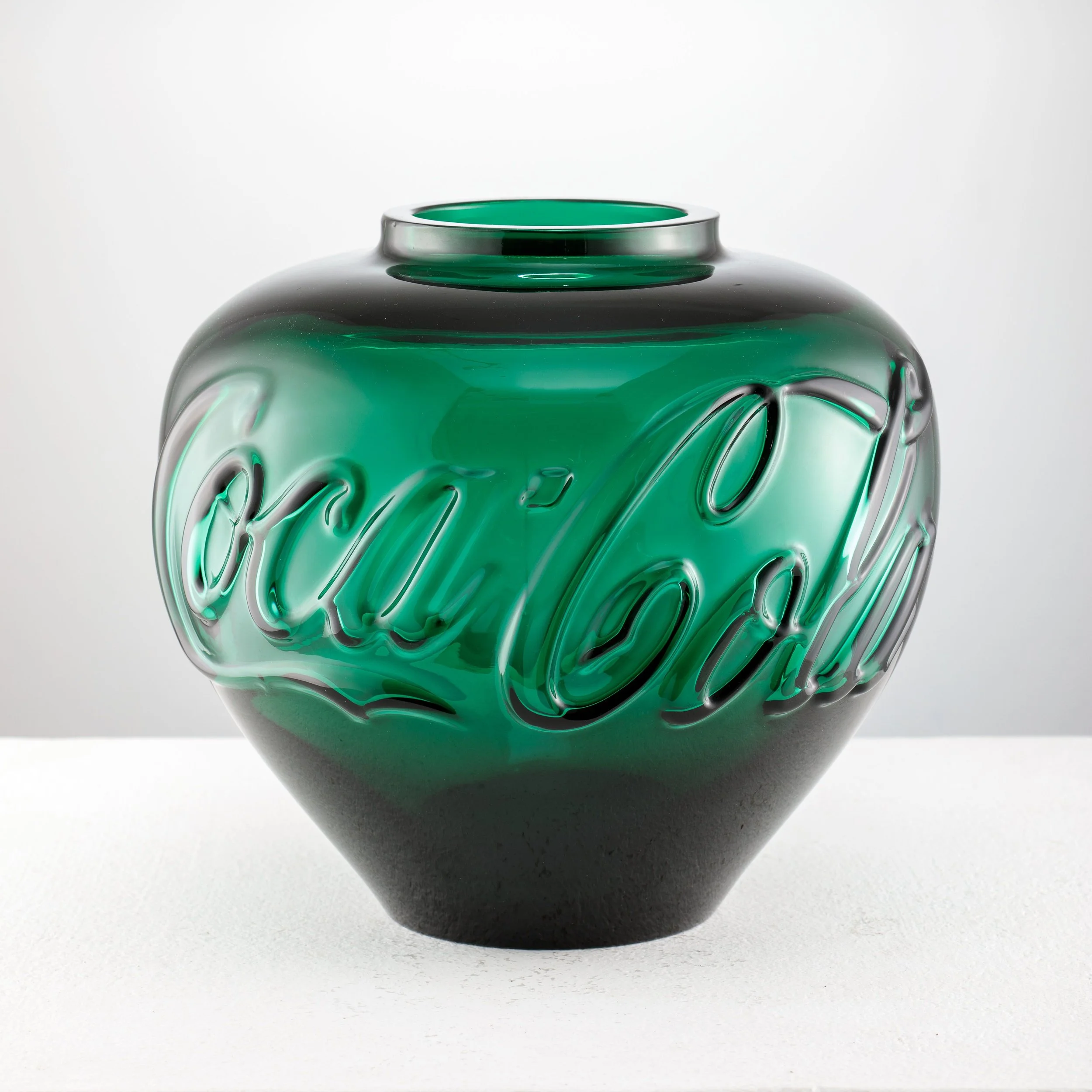
Ai Weiwei Vase (Green) 2024 Murano Glass 22 × 22 × 20.5 cm (8.7 × 8.7 × 8.1 in)
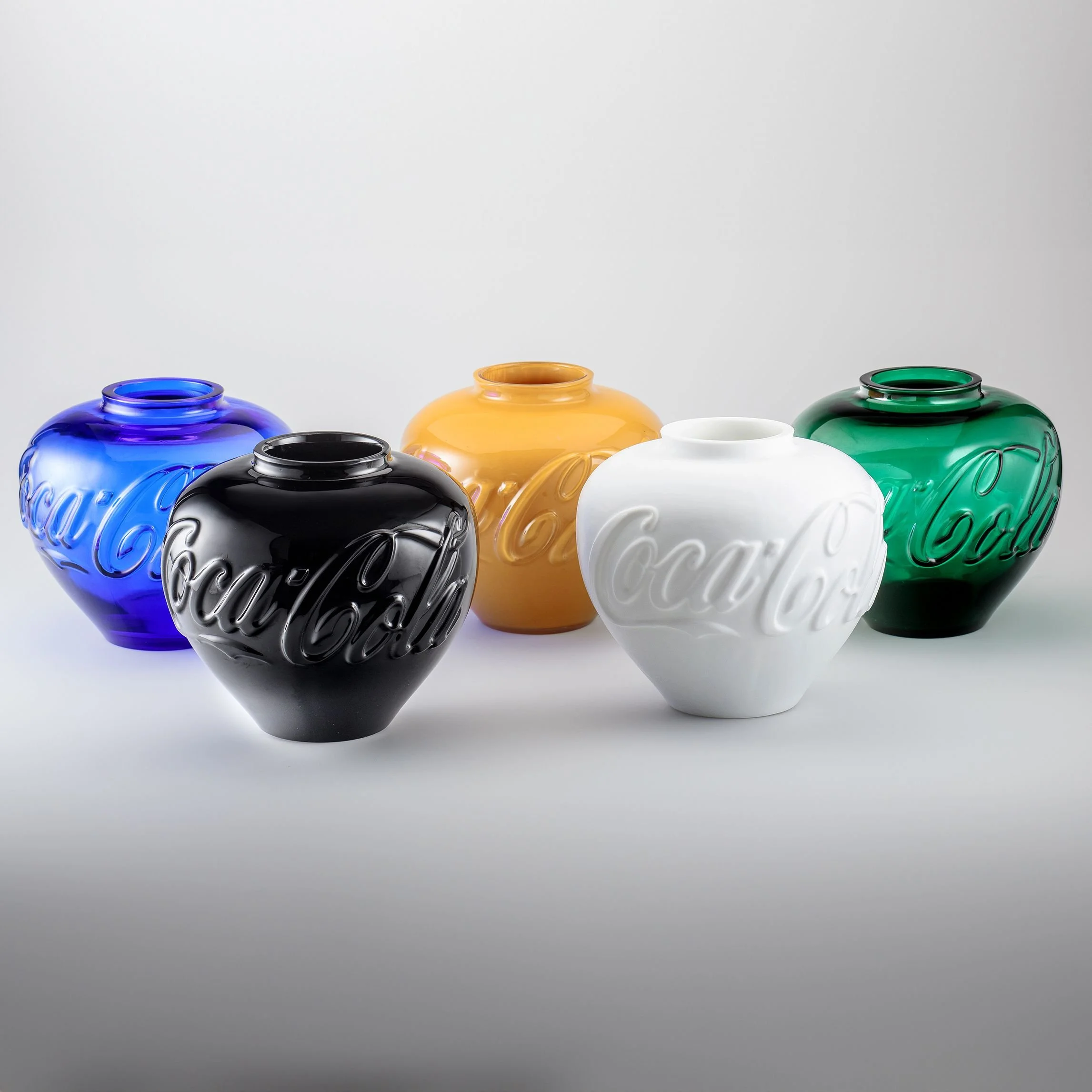
Vases in Five Colours (Set of 5)-Ai Weiwei-1 Ai Weiwei Vases in Five Colours (Set of 5) 2024 Murano Glass 22 × 20.5 cm (8.7 × 8.1 in) Signed and numbered on accompanying certificate and inscribed on the bottom Less than 40 compiled with matching numbers out of the total edition of 100